← All projects

Case study · GetYourGuide

Vision for a holistic discovery experience.

Setting a mid-term direction for destination discovery — a story about leadership alignment, surfacing user mental models through research, and letting go of a project for the greater good of the organization.

Duration December 2022 — March 2023
Company GetYourGuide
Team CPO, Exec, Product, Design, Merchandizing, Research
Method Vision, exploratory research, concept testing

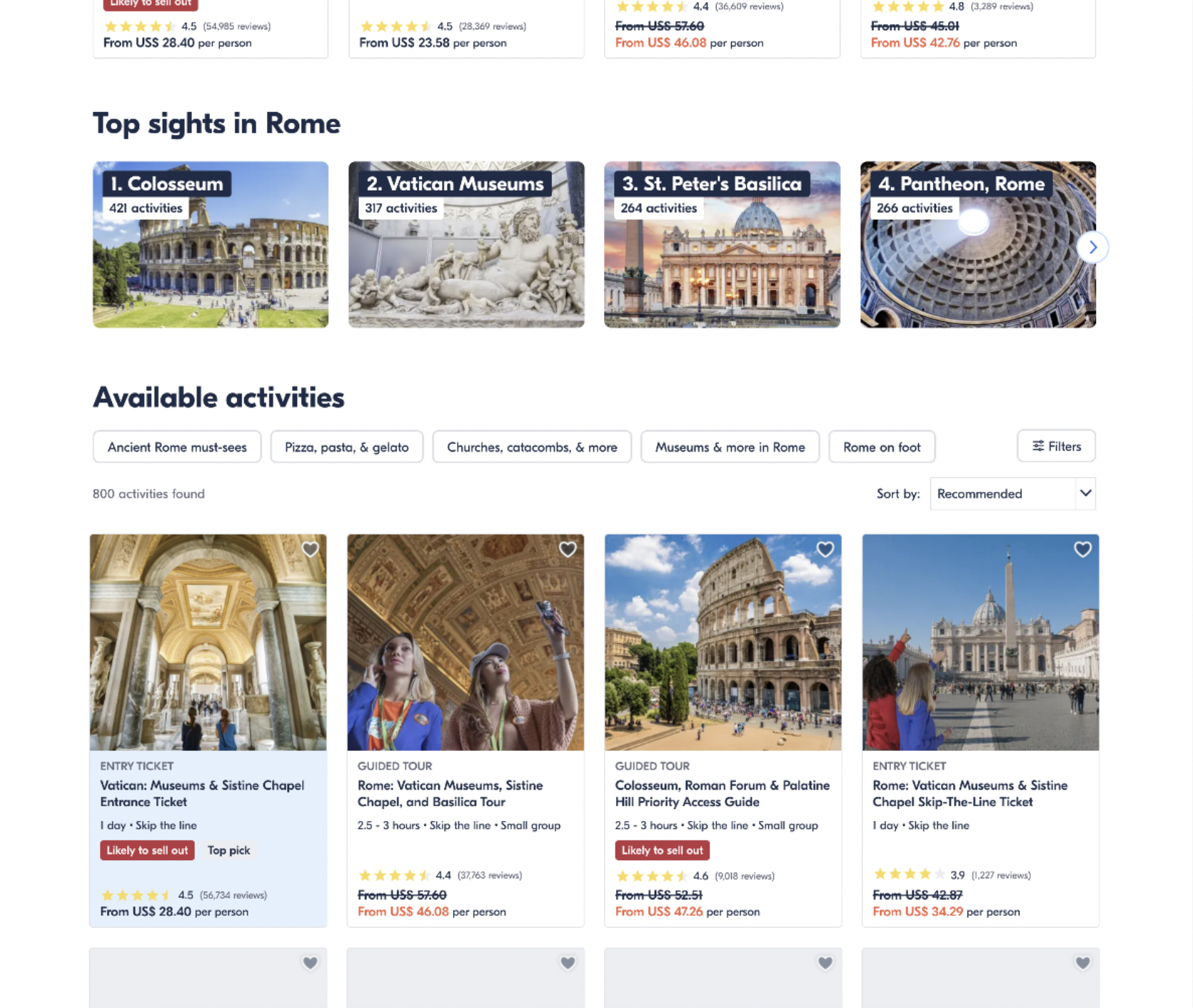
At GetYourGuide, we had recently launched and scaled an updated version of city discovery pages and built infrastructure to group activities in curated "collections".

We needed to create a holistic user journey and a mid-term vision for destination discovery on our platform. The goal was to inform product strategy and guide organizational structure.

I was part of the leadership team that developed the initial direction for the project and shared it with our CEO. We then collaborated with our teams to align on a direction and enable them to take the next steps.
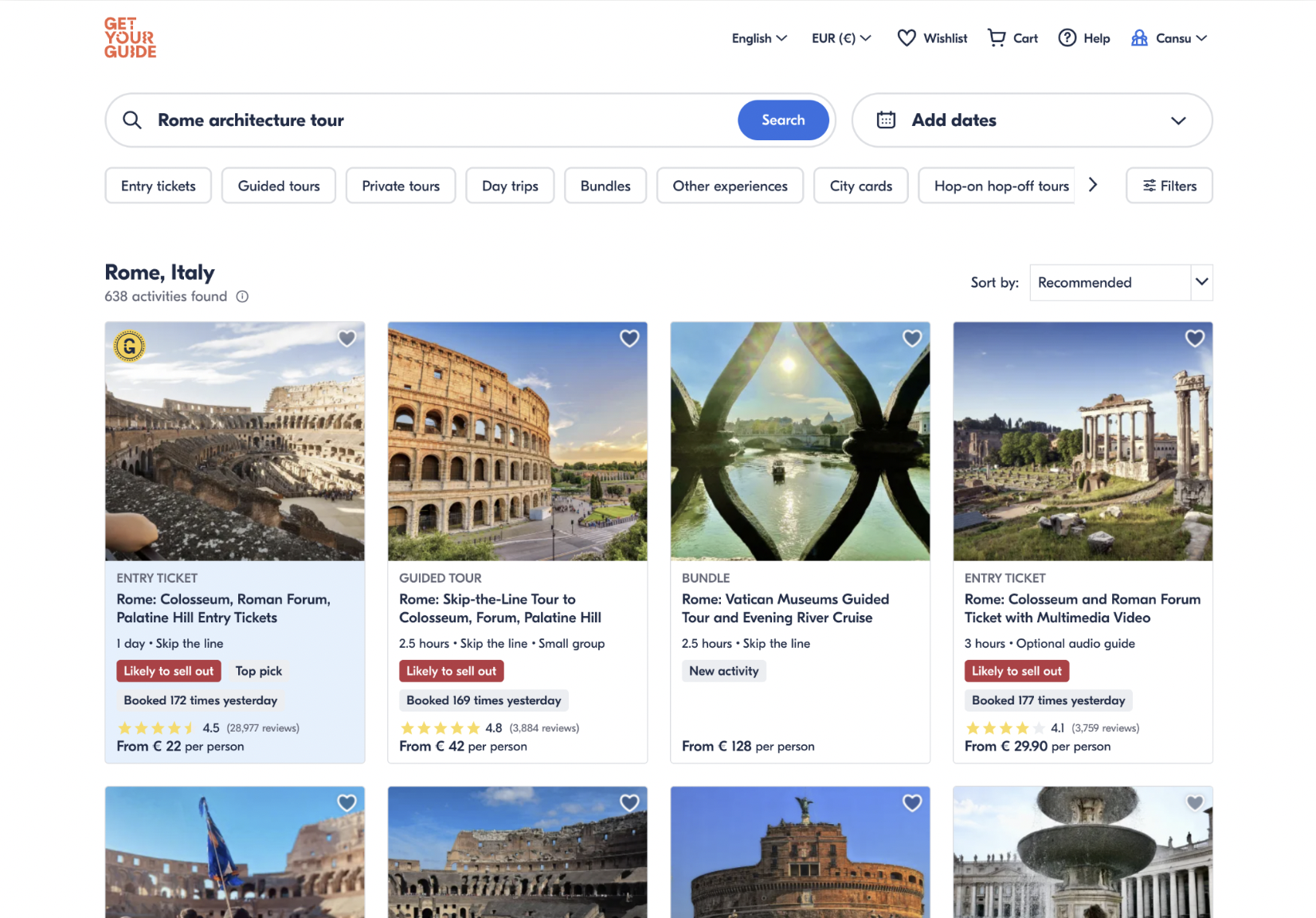
The user journey had become disjointed, reflecting our organizational structure. The user had to relearn our product on different surfaces.

The user journey was unintentionally different for users coming from different channels (ie. search engines vs our search bar).

Different teams were tackling the same problems with different directions because there was no aligned direction.

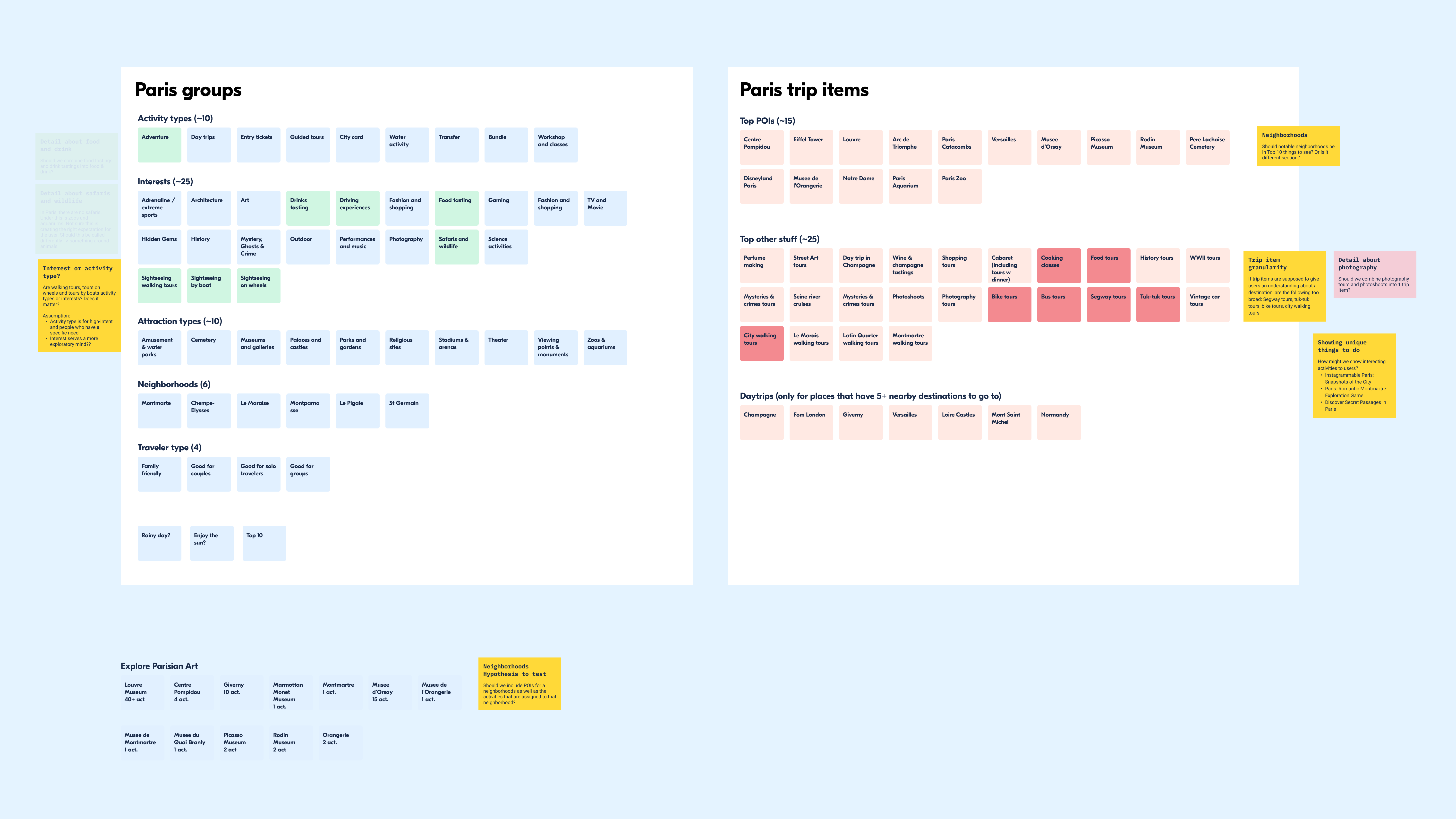
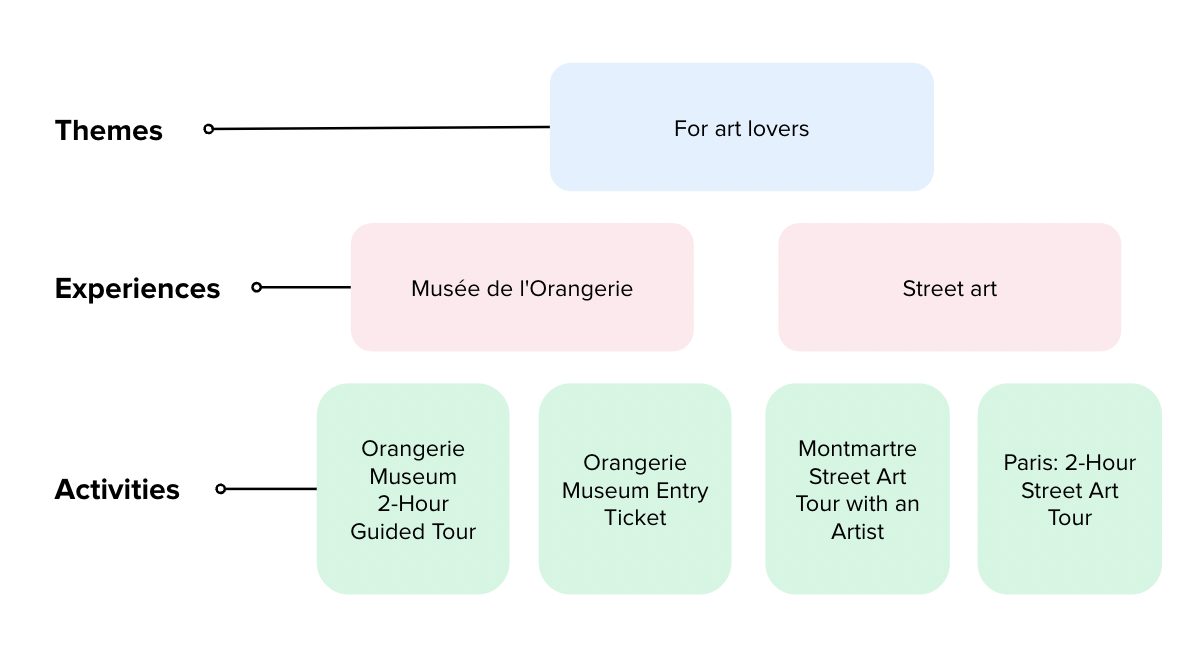
We were now able to categorize and group our inventory in many different ways. We could improve our product to match the traveler's mental model.

A task force including the CPO, 2 Product Directors, and myself worked to create alignment on the problem space and a rough vision.

This included presenting the work to our CEO, gathering his feedback, and aligning key principles. For example, it was important for him that discovery of destinations was made primarily through the GYG inventory (aka the activities) rather than higher-level groupings.

  1. Agreed on clear definitions for different traveler intents. We had done previous research and wanted to be able to speak the same language throughout the organization.
  2. Aligned on specific traveler journeys that were important for the vision. These were hypotheses that we wanted to validate through generative research.
  3. Created guiding principles.
  4. Created a rough vision prototype to align the leadership group. The main purpose was to utilize this as a communication device and stress-test hypotheses.

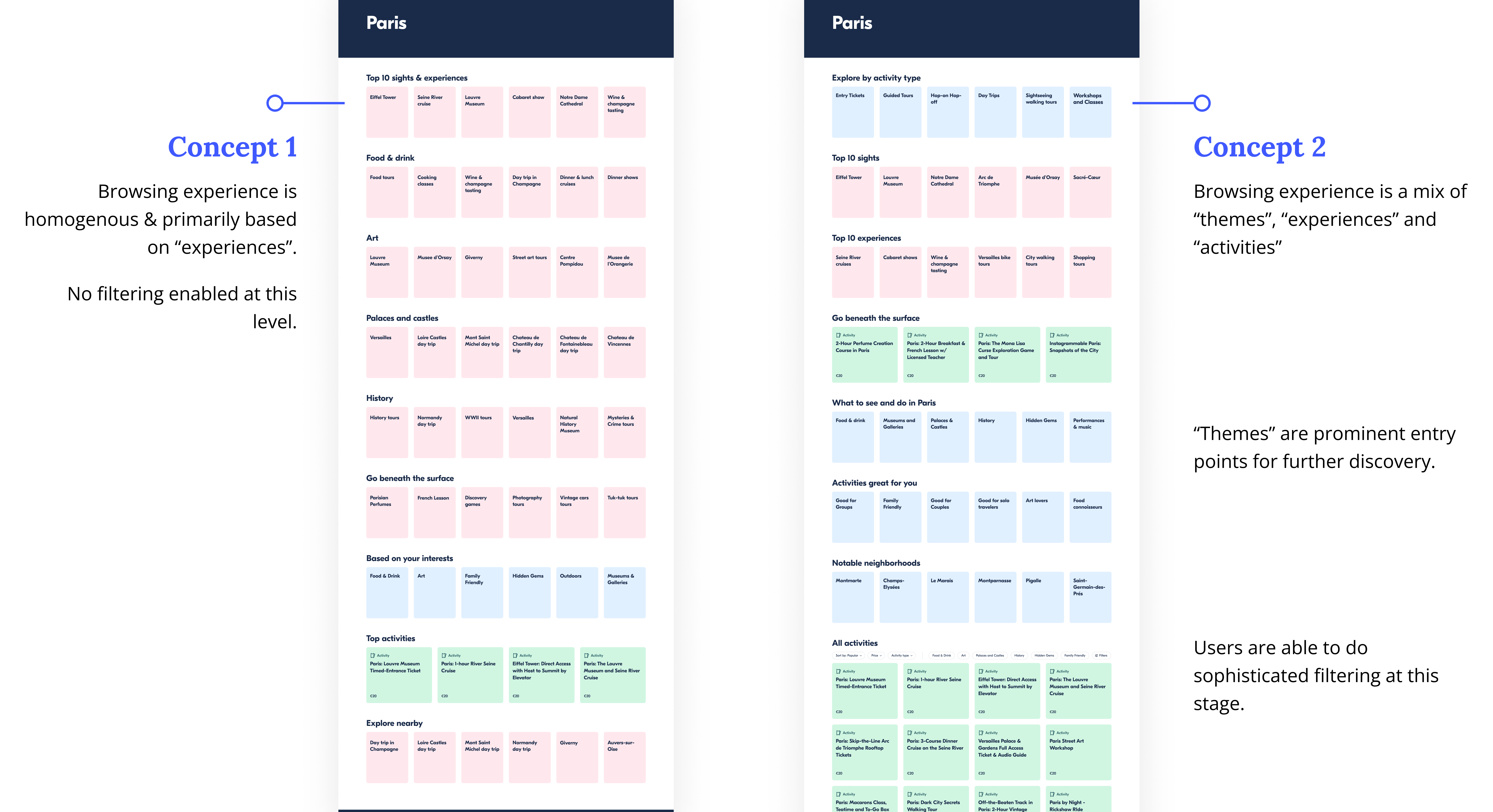
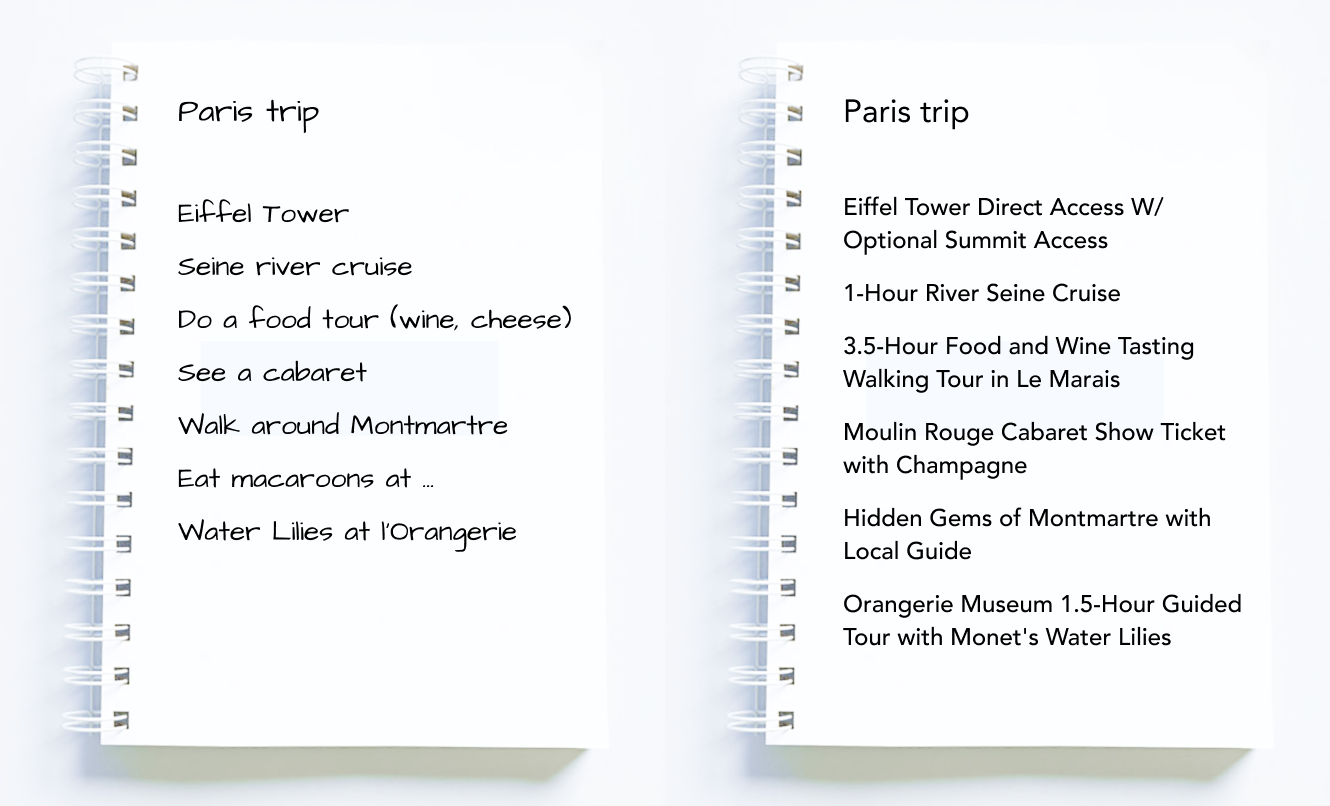
We believed that travelers created a shortlist of experiences rather than specific activities in early travel planning.

We wanted our product to offer a browsing experience that matched this mental model. If confirmed by user research, we would create "experience" groupings and showcase them on our discovery pages.

Four ideas formed the backbone of the rough vision and framed every discussion downstream.

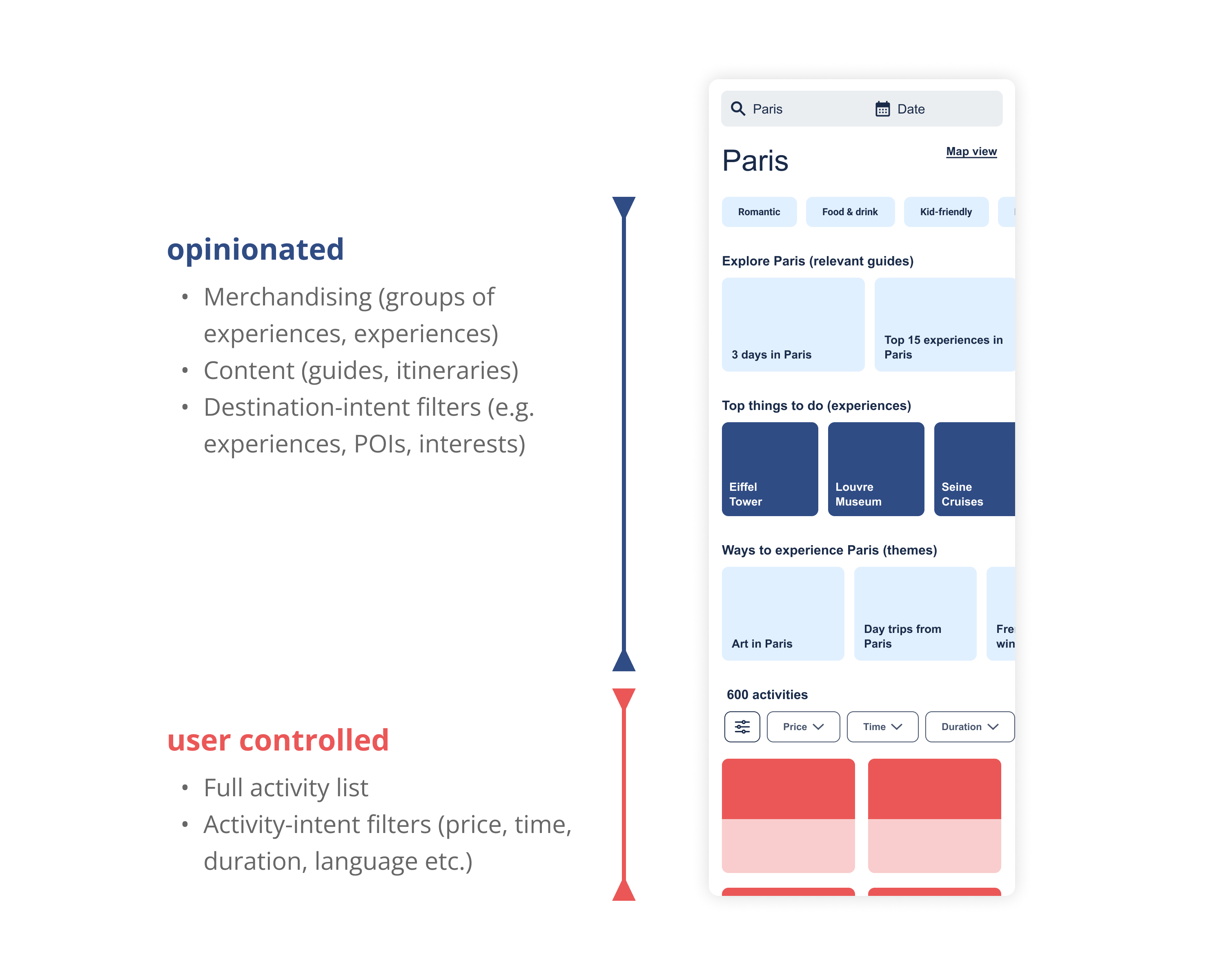
Diagram illustrating opinionated vs user-controlled product modules
Idea 01 We separated the product modules as opinionated vs user-controlled. We would use opinionated modules to guide user discovery.
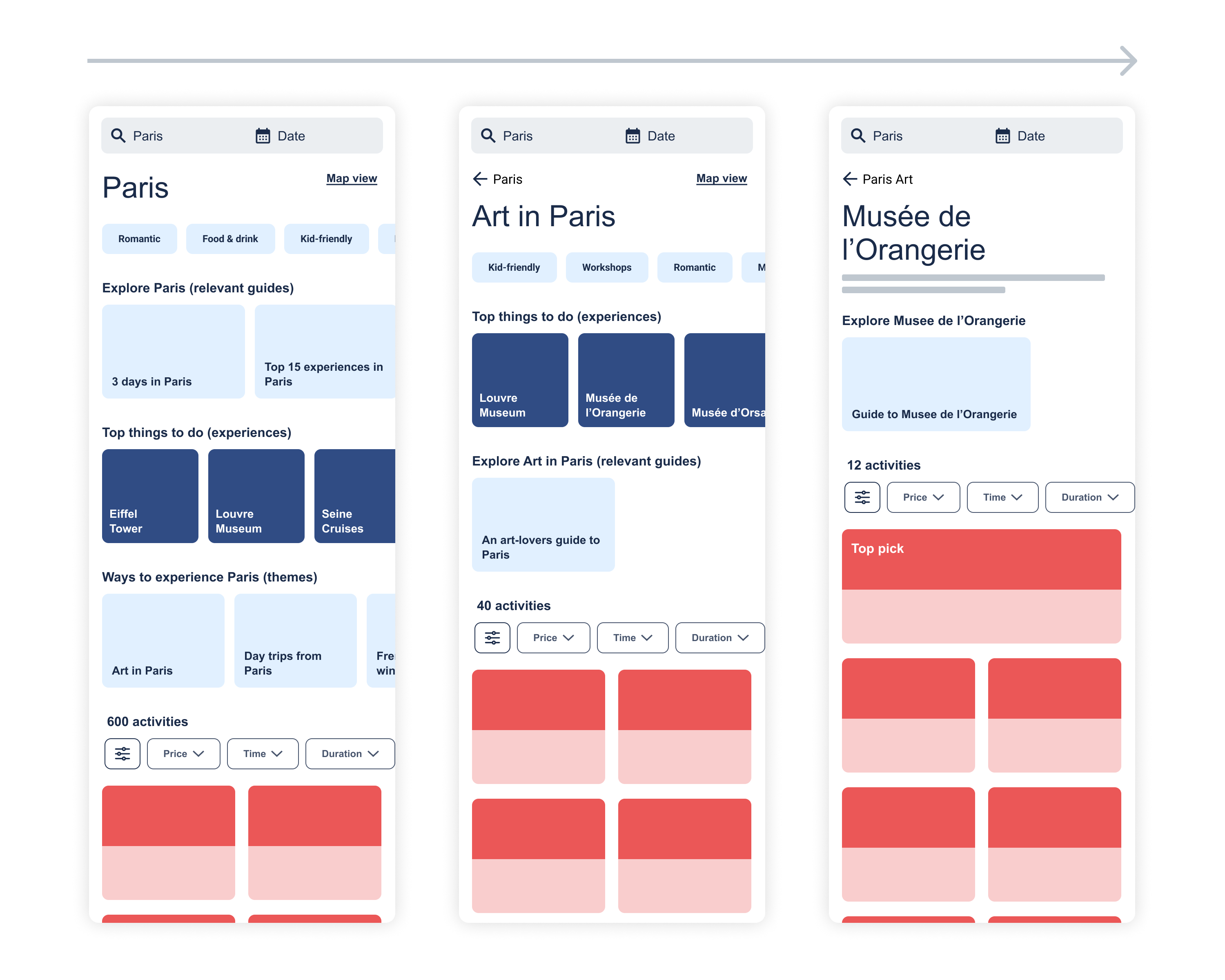
Diagram showing how opinionated content reduces as queries become more specific, giving way to user controls
Idea 02 As a user's search query goes from broad (ie. Paris) to specific (ie. Eiffel Tower), we show less opinionated content and give more user controls.
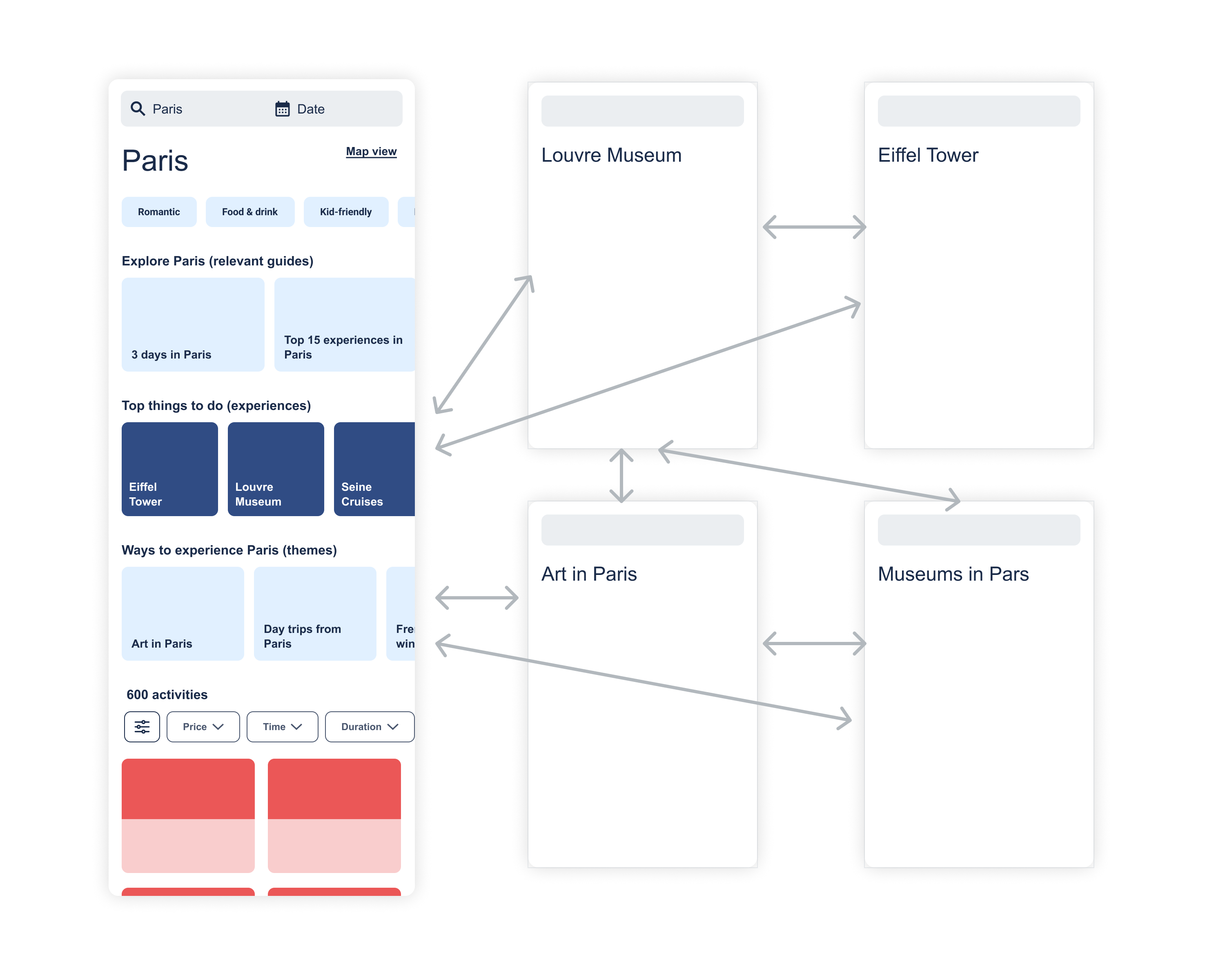
Diagram showing navigation paths: narrowing down, going back up, and moving across in discovery
Idea 03 We wanted to enable users to narrow down (Paris → Eiffel Tower), go back up (Musée de l'Orangerie → Museums) & across (Museums ↔ History) in their search. There should not be dead-ends in our discovery experience.
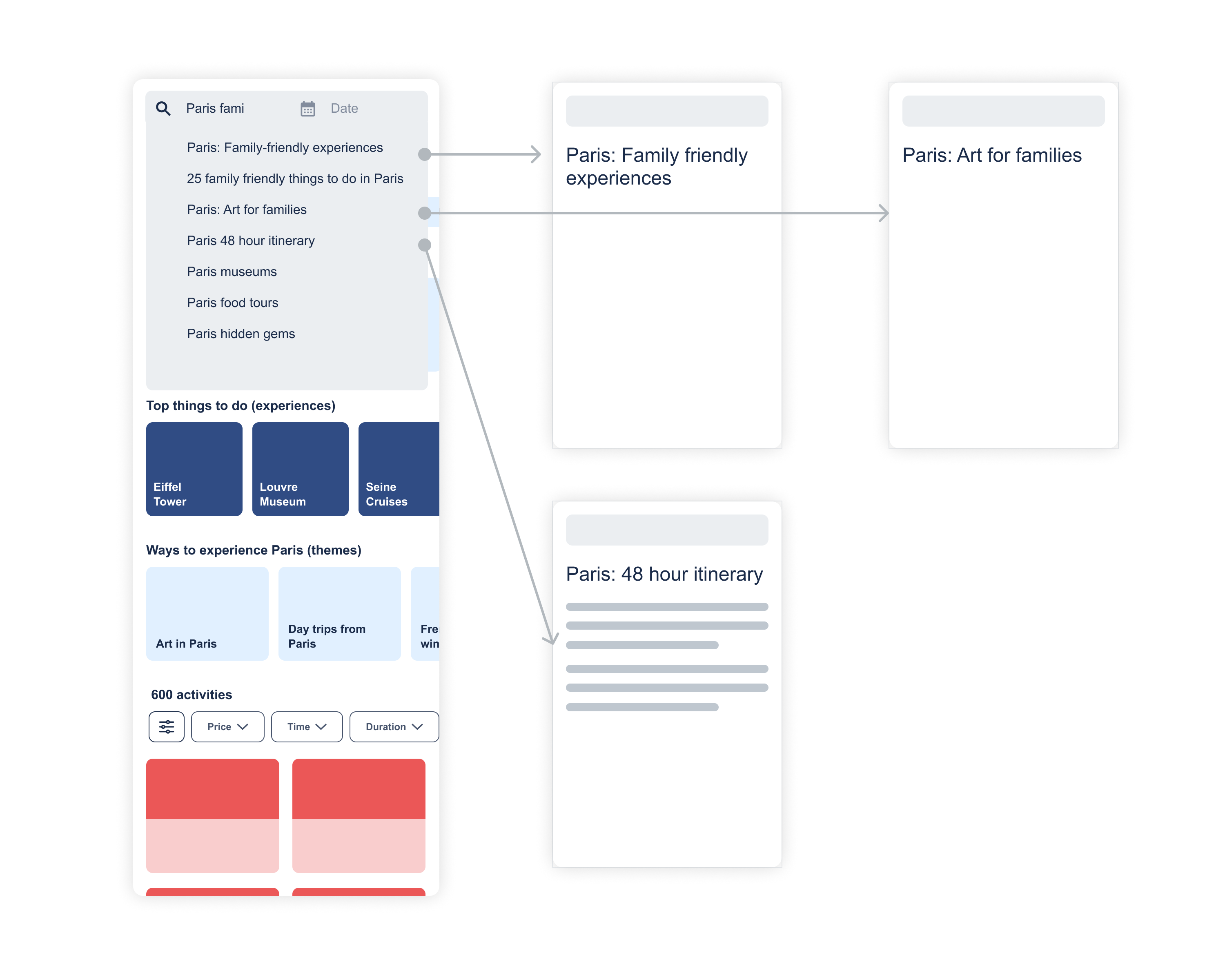
Diagram showing powerful search suggestions surfacing results for any query
Idea 04 We wanted to have powerful search suggestions for all queries. This would make it easier for users to navigate our website through the search bar and get to the optimum experience.

With high-level directional thinking created on the leadership level, we got our teams involved. The goal was to get feedback on the definitions and principles, and discuss their ideas on how we can achieve our goals.

A team of 2 product designers, 1 content designer, 2 PMs, and one merchandizing lead ran a design sprint with us as the leadership team coming in and out of the process.

Guidelines we agreed on

  1. Group activities into themes and experiences.
  2. Surface these groupings based on the user's context. Broad search would result in higher level groupings.
  3. Create "opinionated" modules specific to a destination query to guide discovery.
  4. Work on navigation and create a consistent experience regardless of acquisition channel.
  5. Everything on our website should be searchable and return the optimum landing experience.

Follow-up questions

  1. How do travelers go from deciding on a destination to go to deciding on things to do and booking them?
  2. Do we need to have 2 separate discovery experiences? (one based on guided browsing and one fully user-controlled search)
  3. We had defined two hierarchies: themes and experiences. Does this hierarchical grouping resonate with users? If so, how should we create these groups to match how users think?

We worked with an external agency that conducted 30 diary studies and 12 in-depth interviews with people from the US and Germany who fit our target audience. The in-depth interviews were done in 2 sections: exploratory research to understand traveler planning behaviors and concept testing.

Part of my role was to onboard our new product designer and collaborate with her on concept creation. We did a few design jams to define our primary research questions and 2 concepts that would help us answer them.

Final concepts taken into concept testing with users
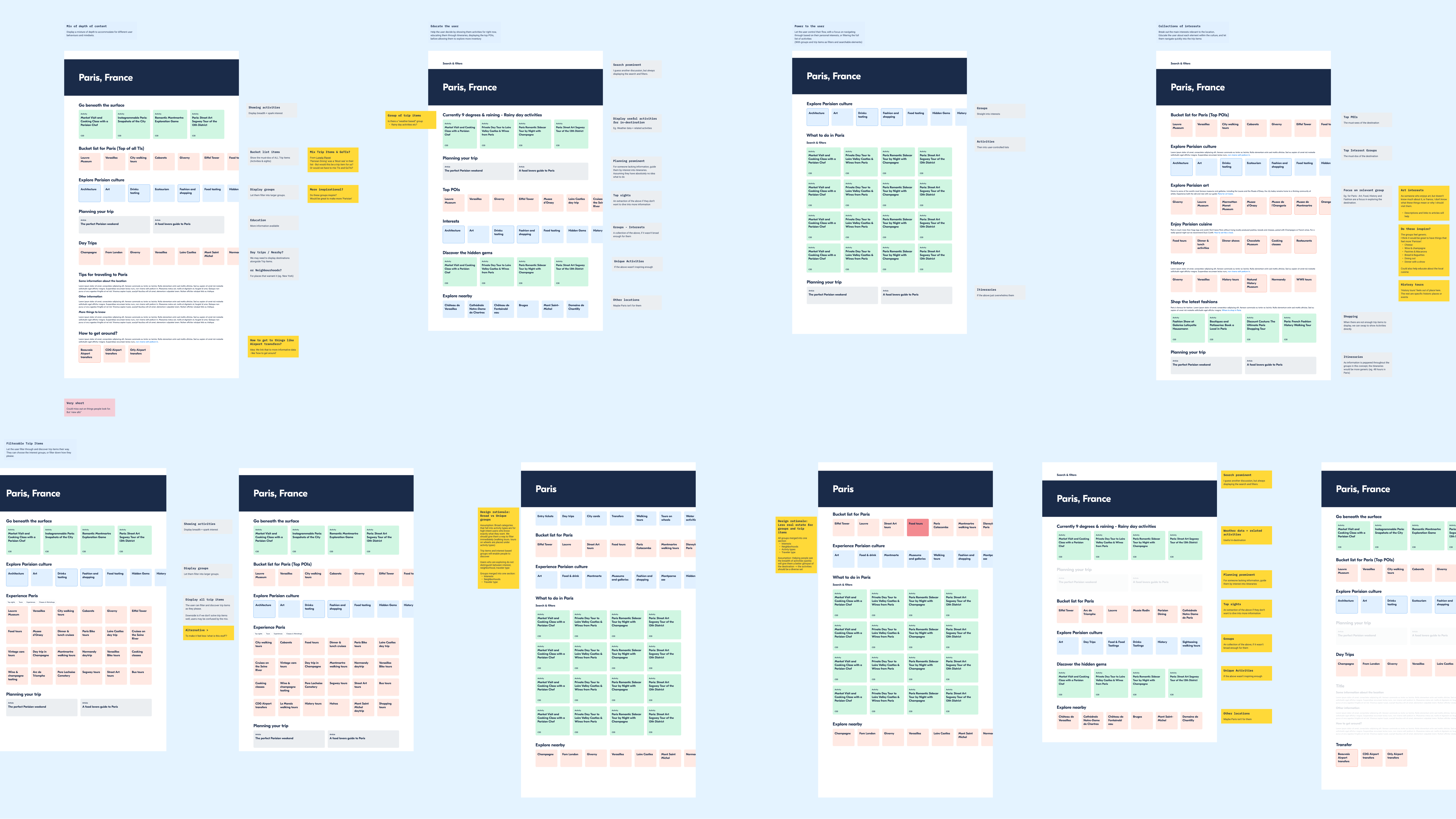
Early concept test explorations for the discovery experience
Exploration sketches of how to organize activity groupings

The research gave our organization frameworks and common language to make decisions and move forward with some of the core ideas. Some of the more concrete concept test findings:

  1. The way we grouped our inventory resonates with users. This means that we can create groupings at two hierarchical levels, based on interest, type of activity, type of attraction, etc. as we had planned.
  2. People prefer to browse through higher-level themes to guide them to understand a destination (unless they have a specific idea of what they want to do).
  3. People separate attractions from non-attraction experiences (ie. Eiffel Tower vs Wine & Cheese Tasting). Both are seen as important.
  4. Even in early discovery, people like the option to have controls over the result set they see (ie. with the usage of filters). We don't need to create a completely different journey for this.

Our teams started working on the foundations based on the findings, so we could start A/B testing them. One core initiative was creating a scalable way to group activities in order to surface them in our product.

In March 2022, organizational changes were made, resulting in my group's main focus shifting to user engagement and retention. All search & discovery work was consolidated under another product group. As of 2023, many of the core ideas from the vision have been tested and launched.

Launched in 2023

Key features that made it to production.

#1

Creating new groupings (aka "themes") and showcasing them to guide users through destination discovery.

#2

Merging filtering & browsing into one experience, instead of two disjointed journeys.

#3

Creating consistency between discovery pages and search results pages — layout, filters, and everything in between.

Credit to Traveler Product Group: Marlene Rosner, Lisa Monelli, Ian Good

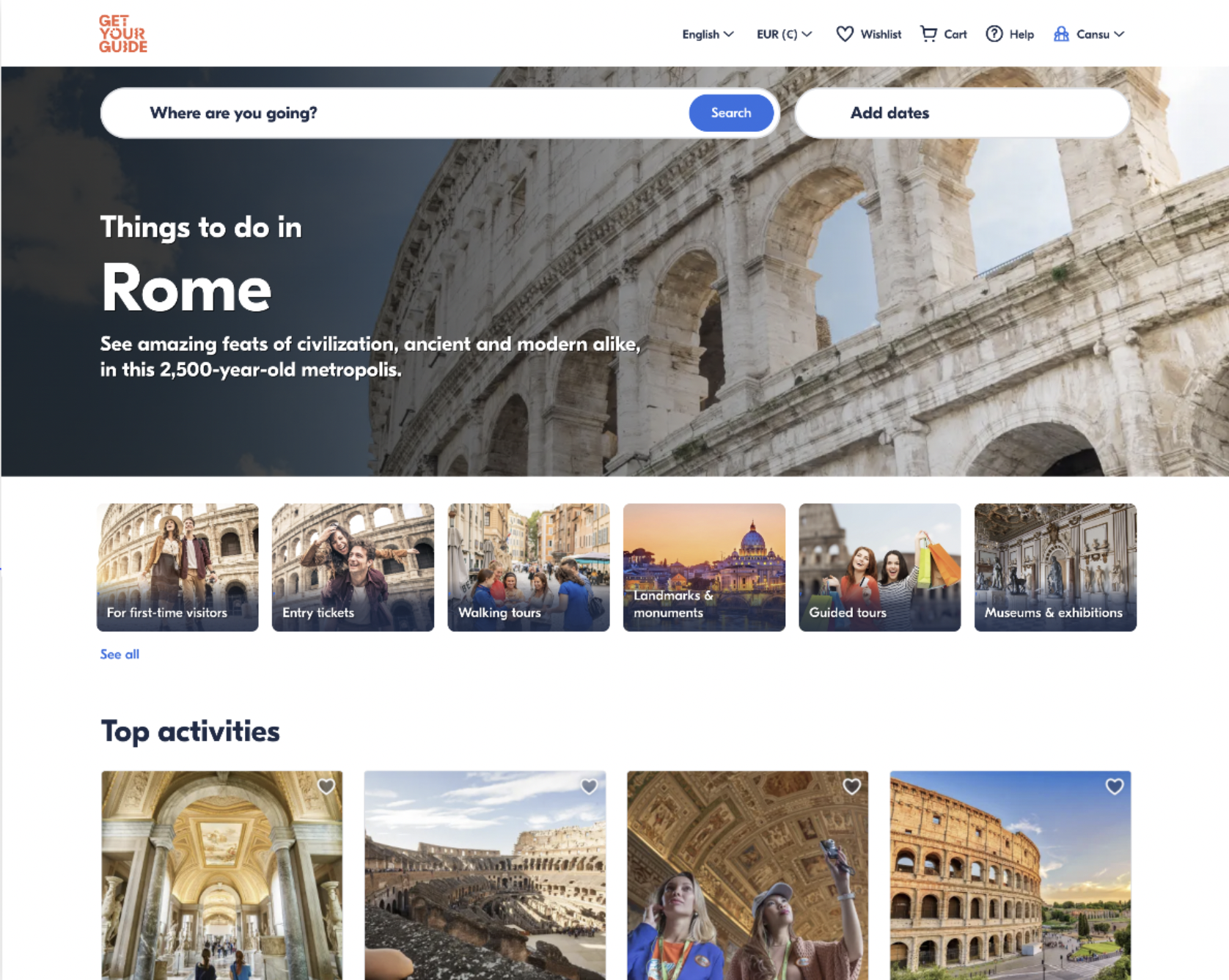
Feature #1 in production: new groupings (themes) showcased on the destination discovery page
Feature #2 in production: filtering and browsing merged into a single experience
Feature #3 in production: consistency between discovery and search results pages

Why do a "vision"?

  1. A high-level vision acts as a communication and alignment tool. It can also build trust with executives (as was in our case with our CEO).
  2. A holistic vision enables teams within an organization to realign and move together towards a cohesive experience.

Ways of working

  1. As a leadership team, there is a fine balance of creating direction for teams vs telling teams what to do. When leadership creates too detailed vision, it can be the latter, which demotivates teams.
  2. When creating a vision for alignment, most time should be spent on discussing principles and context. The solution direction should be created as a team.

Leadership

  1. Maturity and leadership sometimes means letting go of projects we are personally invested in for the interest of the organization.